
The Cost Trap Most Buyers Fall Into
When purchasing hospitality textiles, the first comparison is usually price per piece. On paper, the difference between suppliers may look minor. A few cents here, a dollar there. But commercial textiles are not one‑time purchases. They are assets that move through hundreds of wash cycles, heavy guest use and constant handling.
A lower upfront price often hides higher long‑term costs:
- Faster wear and tear
- More frequent replacements
- Inconsistent batches that can’t be mixed on shelves
- Additional labor spent sorting, rejecting or reordering
Over time, these costs quietly exceed the original savings.
Where Hospitality Linen Costs Actually Come From
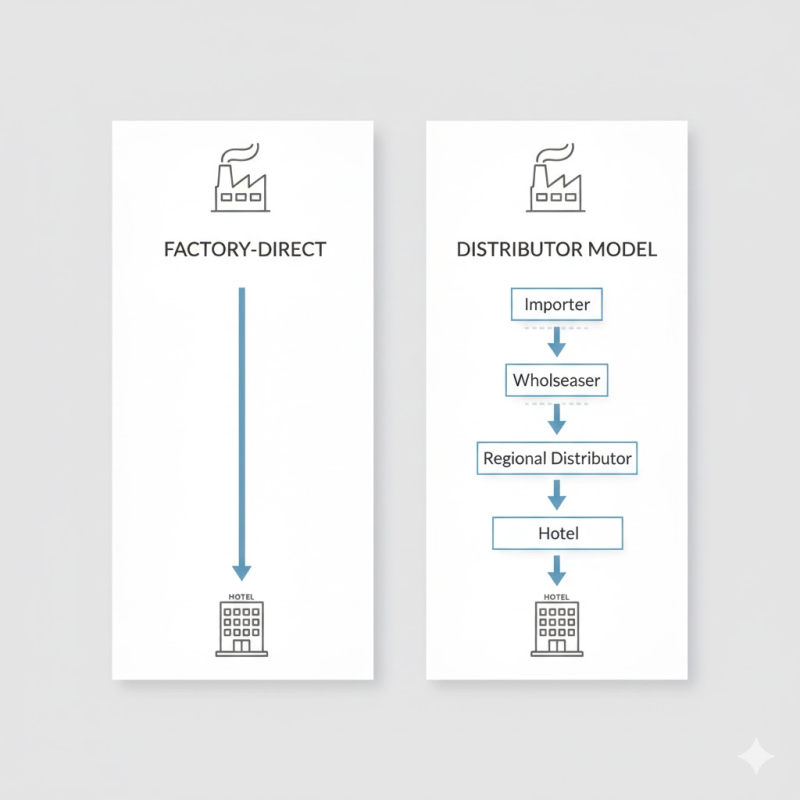
To understand why factory‑direct sourcing matters, it helps to see how most linens reach the market.
In a traditional distributor model, costs stack up across multiple layers:
- Importers or agents
- Warehouses and regional distributors
- Sales commissions and marketing margins
Each layer adds markup, but none improve how the textile performs after its 50th or 100th wash.
By contrast, factory‑direct suppliers control:
- Raw material selection
- Fabric construction
- Finishing standards
- Quality inspection
This control removes unnecessary markup and reduces costly inconsistencies.
Factory‑Direct vs Distributor: A Practical Comparison
Factory‑direct sourcing is not about cutting corners—it’s about cutting duplication.
Distributor‑led sourcing typically results in:
- Variable specs between shipments
- Limited visibility into production quality
- Higher replacement frequency
Factory‑direct sourcing enables:
- Consistent specifications across every batch
- Predictable performance under commercial laundering
- Longer usable life per item
When textiles last longer, budgets stabilize.
Durability Is the Real Cost Saver
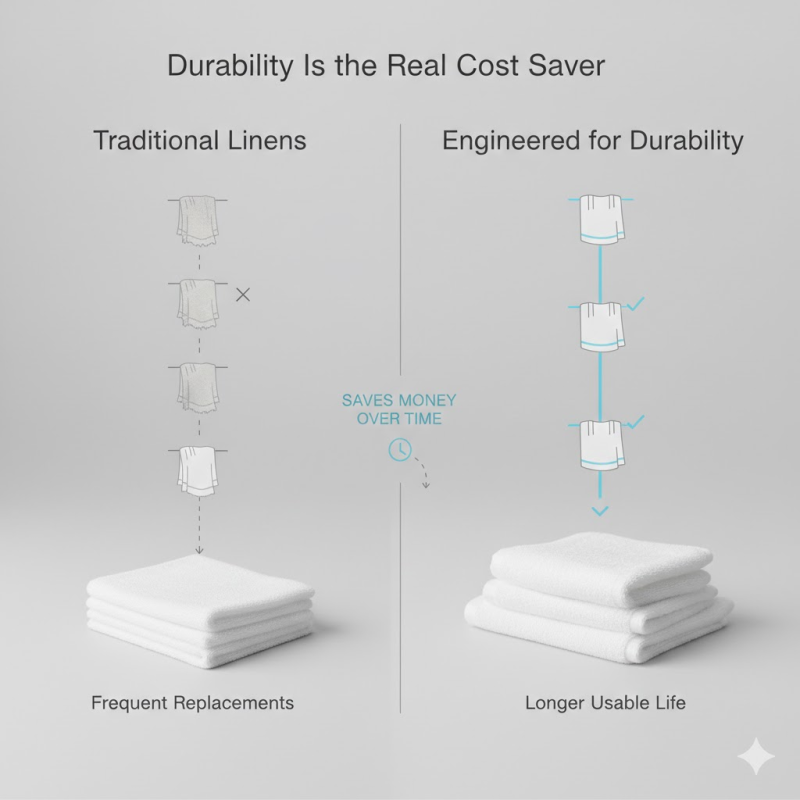
Commercial laundering is unforgiving. High heat, industrial detergents, and constant agitation expose weaknesses quickly. Linens that aren’t engineered for this environment lose absorbency, fray at the edges, or shrink beyond usable tolerances.
Durable construction—proper yarn quality, balanced weave, and reinforced stitching—means:
- Fewer replacements
- Lower emergency reorders
- Reduced inventory pressure
This is where long‑term savings are realized.
How Hospitality Buyers Reduce Linen Spend by Up to 40%
Operators who successfully reduce linen costs tend to focus on three things:
- Lifecycle thinking – evaluating how long a product performs, not how cheap it is upfront
- Standardization – keeping consistent specs across properties or departments
- Supplier accountability – working with manufacturers who own production and quality
Over a year or across multiple properties, this approach can cut linen budgets significantly without compromising guest comfort.
Smart Questions to Ask Any Linen Supplier
Before placing your next order, consider asking:
- Where is this product manufactured?
- How do you ensure batch‑to‑batch consistency?
- How does this fabric perform after repeated commercial washes?
- What quality checks are done before shipping?
Clear answers usually signal a reliable partner.
Final Thought
In hospitality, the cheapest linen is rarely the most economical one. Factory‑direct sourcing shifts the focus from short‑term price to long‑term performance helping operators control costs, reduce operational friction and plan with confidence.
When linens stop being a recurring issue, teams can focus on what matters most: running their business.
